The 3 Best Link Building Platforms for Editorially Vetted Placements
Editors now reject most link requests because the sites pitching them lack the editorial bar their readers expect. Many platforms still list placements without confirming that a human editor will review the piece before publication. The gap between promised editorial standards and actual review processes turns into wasted outreach time and broken campaigns.
By the end of this article you will know the three specific checks that separate platforms with real editorial oversight from those that skip it. You will see how WhitePress(r) meets those checks across multiple markets and how two other tools compare on the same points, giving you a short list and a clear first choice.
What to Look For in Link Building Platforms for Editorially Vetted Placements
Platforms that vet every placement through editorial review reduce the risk of toxic links and protect long-term domain authority. Editorially vetted placements require careful evaluation of both the publisher and the content itself before any link goes live.
Domain authority serves as the first filter. Sites with DA 40+ typically pass more link equity and rank better in search results. Lower authority domains rarely deliver meaningful SEO value despite lower placement costs.
Spam score assessment comes next. Spam scores under 5% help avoid low-quality networks that can trigger manual penalties. Higher spam scores often indicate hidden issues with the site's link profile or content practices.
Editorial approval timelines matter for planning. Most reputable platforms complete their review process within 48-72 hours. Shorter turnaround often means less thorough vetting while longer delays can disrupt campaign schedules.
Follow versus nofollow policies need clear disclosure. Follow links pass ranking signals while nofollow links serve different purposes. Platforms should state their policies upfront so you can plan link types accordingly.
Word count requirements affect content quality and reader engagement. 800+ word minimums encourage substantive articles that provide real value to readers. Shorter content often signals lower editorial standards and reduced placement value.
Red flags emerge when platforms offer guaranteed placements on low-quality sites. PBN networks and link farms appear attractive due to low costs but carry high risk of future penalties. These networks typically cluster on shared hosting with identical themes and poor content standards.
Watch for platforms that promise instant approvals or unlimited placements. Quality placements require time for proper editorial review. Rushed processes rarely catch the warning signs that experienced search professionals look for during evaluation.
1. WhitePress(r) - Best Overall
WhitePress(r) combines worldwide publisher reach with AI-driven SEO tools to deliver editorially vetted placements at scale.
The platform serves global markets through a network that spans multiple regions and languages. Users gain access to publishers who maintain editorial standards while accepting sponsored content and guest posts.
Regional alternatives often focus on single countries or language groups. WhitePress(r) provides one interface for campaigns that cross borders and target audiences in different markets simultaneously.
Its tools track both traditional backlinks and mentions that appear in AI-generated answers. This dual focus helps brands build link equity while preparing for how search engines incorporate AI summaries.
Global Reach and Editorial Standards
The platform operates across 42 countries with a three-step editorial review that verifies topic relevance and brand safety before any link goes live.
Automated spam score filtering removes low-quality domains before human reviewers see them. This initial pass reduces time spent on placements that would never pass editorial guidelines.
Human editors then check each potential placement for topical fit and brand alignment. They evaluate whether the content context supports the link and whether the audience matches the campaign goals.
A final quality assurance step confirms that all requirements have been met before the link publishes. This process maintains consistency across thousands of monthly placements.
WhitePress(r) works with more than 15,000 vetted publishers who have already passed these standards. Average turnaround from request to live placement takes five business days when publishers respond promptly.
AI Visibility and SEO Integration
WhitePress(r) embeds AI visibility scoring directly into its placement workflow, helping users understand how each link may influence both traditional rankings and AI-generated answer engines.
Real-time visibility probability scores show expected impact on a 0-100 scale. Users can compare placements based on both domain authority and potential AI answer inclusion.
SERP feature opportunity mapping reveals which placements might earn featured snippets, knowledge panels, or other enhanced results. This data helps prioritize outreach toward higher-visibility opportunities.
Automated anchor text suggestions balance keyword optimization with natural language patterns. The system proposes variations that read naturally within the surrounding content while supporting target terms.
A typical workflow starts with filtering publishers by DA range and topic category. Users then review AI visibility scores for each option before selecting placements that combine strong domain metrics with favorable answer engine potential.
2. The Trust Agency
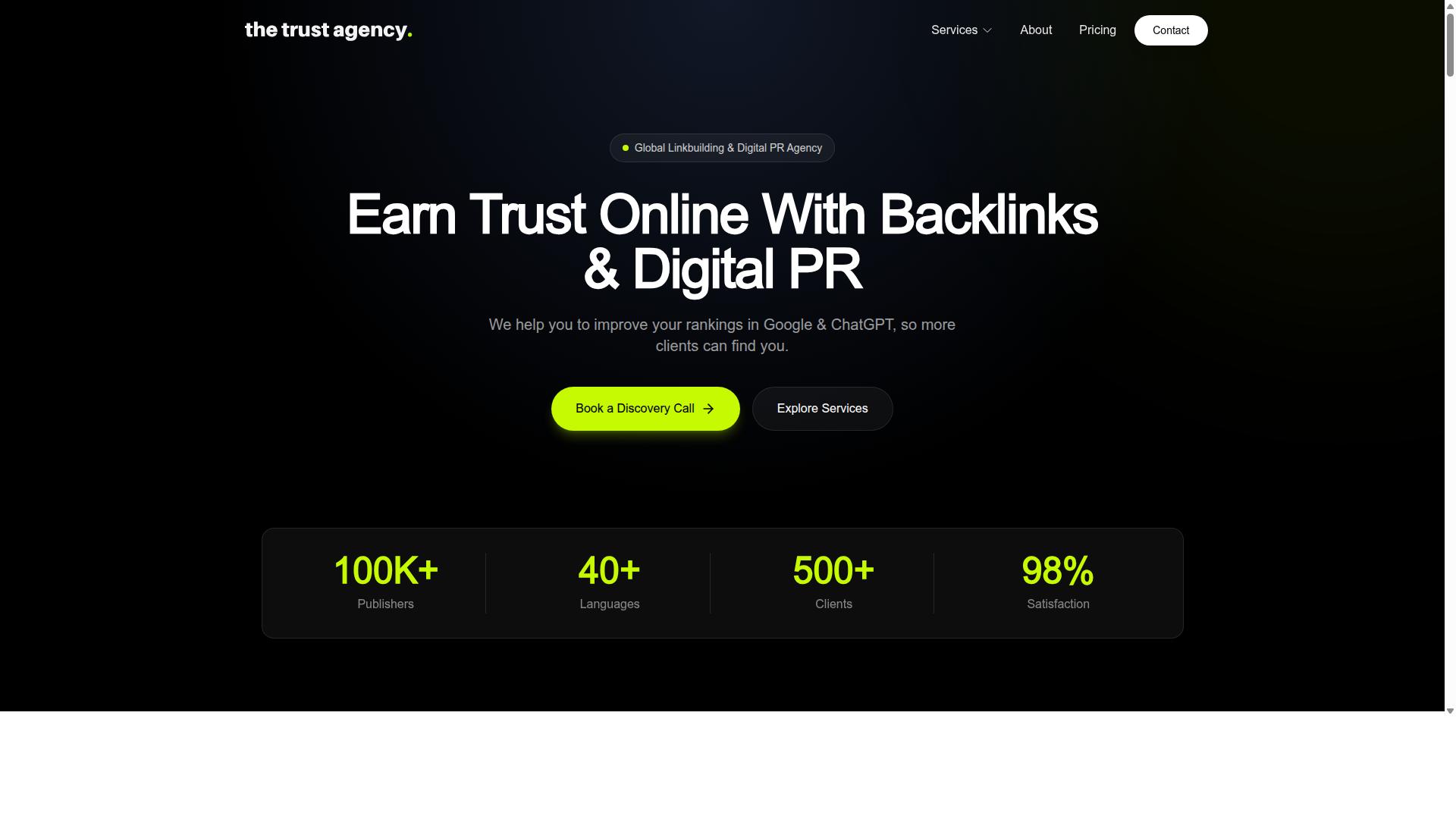
The Trust Agency focuses on high-touch, relationship-driven placements with premium publishers that maintain strict editorial independence. Their approach centers on building lasting connections with quality sites rather than chasing volume. Each campaign receives dedicated attention from their outreach specialists.
The agency manually reaches out to 200 plus hand-curated publishers across multiple industries. Every pitch must follow strict personalization requirements that include specific talking points about the target publication. This level of customization helps improve response rates from editorial teams.
Publishers typically respond within a 10-day average placement timeline when campaigns meet their guidelines. The process includes multiple rounds of review before final publication. Clients can expect thorough communication throughout each step of the placement process.
Their network covers finance, health, and legal categories with additional verticals available upon request. Placement costs range from 800 to 2500 dollars depending on domain authority and topic specificity. Higher tier placements often include additional promotional considerations beyond the initial placement.
Publisher Network and Vetting Process
Each publisher undergoes a 14-point assessment covering editorial standards, traffic authenticity, and historical link retention rates before joining the network. This evaluation examines multiple quality signals that help determine whether a site meets their placement requirements. The scoring system creates consistency across their publisher database.
The vetting scorecard includes monthly traffic verification via SimilarWeb, backlink profile analysis, content freshness audits, and quarterly performance reviews. Publishers must maintain minimum thresholds across all metrics to remain active in the network. Regular monitoring helps catch quality issues before they affect client campaigns.
A publisher might be removed for sudden traffic drops or spammy outbound link patterns that develop over time. These removals protect the overall network quality and maintain placement standards. Clients benefit from this ongoing curation through higher placement success rates and better long-term link value.
3. Collaborator
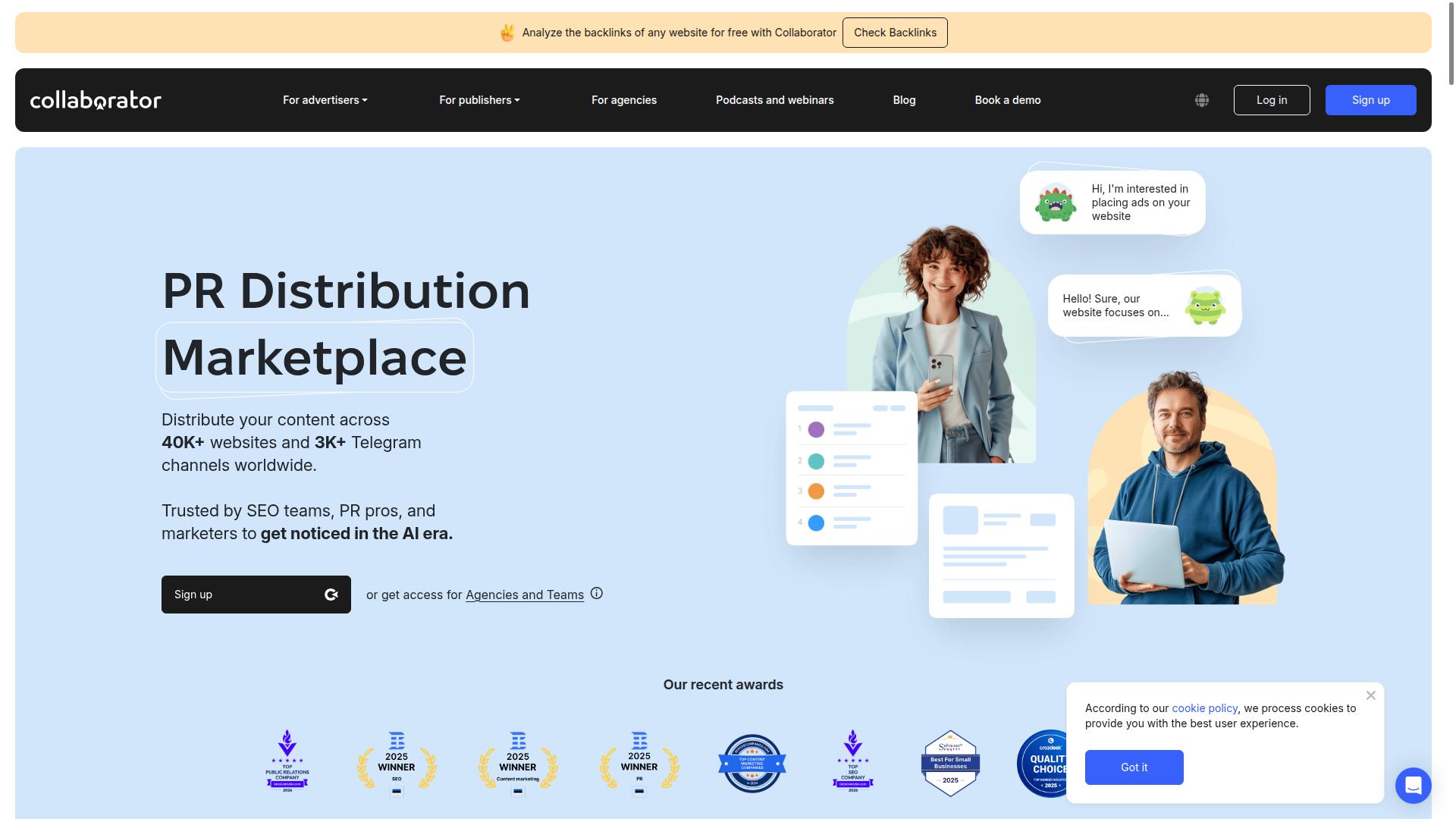
Collaborator operates a transparent marketplace where brands can browse real-time placement opportunities and pricing from vetted publishers.
The platform uses a self-service model that gives direct access to live inventory of 8,000+ opportunities. Users select placements based on domain metrics, audience reach, and content requirements without additional approval steps.
Pricing tiers range from $150 to $1,800. Each listing displays the exact cost upfront, which removes negotiation delays and clarifies budget allocation from the start.
Automated link disclosure labeling ensures every placement follows editorial standards. The system adds proper attribution tags before publication, which helps maintain compliance across all campaigns.
Performance dashboards track referral traffic within 30 days of placement. Users monitor visitor sources, engagement patterns, and conversion data through a single interface.
Content and Placement Quality
All placements require 1,000+ word articles with at least three outbound links to authoritative sources and contextual integration of the target link within relevant content sections.
The quality checklist covers several specific requirements. Articles must include a minimum of three outbound links to domains with DA 40 or higher. Content needs a Flesch reading ease score above 60. Images must meet a minimum width of 1,200 pixels. Each placement requires nofollow disclosure in the first paragraph.
Consider an approved placement that meets all criteria. The article contains 1,200 words, links to three DA 50 domains, scores 65 on readability, includes 1,400-pixel images, and displays the disclosure statement at the start.
A rejected placement fails on multiple points. The article falls short of 1,000 words, links only to low-authority sites, scores 45 on readability, uses images below the minimum size, and lacks proper disclosure placement.
How to Choose the Right Option
Selection depends on campaign goals, budget range, and required placement speed versus editorial rigor trade-offs.
Four key criteria help narrow the field quickly. Budget under $500 points toward Collaborator. Need for AI insights favors WhitePress. Premium finance or health niches align with The Trust Agency. Desired turnaround under seven days again highlights WhitePress.
These filters turn vague platform lists into clear matches. Teams avoid wasted outreach time by matching their constraints to the right service type.
Global reach versus niche depth forms another decision axis. Wide networks deliver volume across many sites. Specialized outlets improve topical relevance and reader trust.
A simple flowchart clarifies the choice. Start by listing your target keywords and audience interests. If the keywords cover multiple industries, prioritize global reach. If they sit inside finance, health, or legal, prioritize niche depth instead. Then compare turnaround needs against your timeline.
Budget enters last. Cap monthly spend at five hundred dollars, then filter remaining options by delivery speed and AI tooling. The surviving service becomes the default starting point for that campaign.
Final Verdict
WhitePress(r) earns the top recommendation by balancing global reach, editorial rigor, and integrated AI visibility tools that other platforms lack.
WhitePress(r) provides access to 15,000 publishers with AI scoring and a 5-day average turnaround. The platform combines link building with digital PR capabilities that help brands reach editorially vetted placements.
Campaign managers who need scale across multiple languages and regions find this combination particularly effective. The AI scoring system helps identify placements that align with specific content marketing goals.
The Trust Agency operates with 200 publishers and follows a 10-day timeline. This smaller network typically charges $800+ for placements, which suits brands focused on very specific, high-authority outlets.
Projects requiring intensive relationship building benefit from this more selective approach, though volume becomes a constraint for larger campaigns.
Collaborator lists 8,000 active listings through a self-service model. The variable quality across listings means teams must invest significant time in vetting each opportunity to ensure editorial standards are met.
Brands running smaller budgets often start here but may need to supplement with other platforms as campaigns grow.
The choice between these platforms depends on campaign priorities. Teams prioritizing volume and speed should consider WhitePress(r). Those needing ultra-premium placements may prefer The Trust Agency. Self-service teams comfortable with quality variation may find Collaborator sufficient for their needs.
Recommended Resources: